Can Dogs Have Honey? What Every Owner Should Know
Can dogs have honey? Yes, if your dog is a healthy adult. A small amount makes a fine rare treat. Think about one teaspoon, given once in a while. Honey is not toxic to dogs. But it is almost pure sugar. That sugar is the whole story. Too much can add weight and hurt teeth. Some dogs must skip it fully. Puppies, diabetic dogs, and dogs with weak immune systems fall in that group. This guide gives you the short answer first. Then it covers safe amounts, raw versus pasteurized honey, and the xylitol trap.
Key takeaways
- Yes, healthy adult dogs can have a small amount of honey as a rare treat.
- About one teaspoon is the top amount for a medium dog, a few times a week at most.
- Puppies under 12 months, diabetic dogs, and dogs with weak immune systems must skip honey.
- Raw honey can carry botulism spores, so it is never safe for puppies.
- Check labels on honey flavored foods, since xylitol is toxic to dogs.
The Short Answer: Yes, With Limits
Honey is safe for most healthy adult dogs. It is not toxic. PetMD and the American Kennel Club both say so. The catch is the sugar. Honey is nearly all sugar and calories. It adds nothing your dog needs. A good dog food already covers the diet. So treat honey as a sweet extra, not as food. A little now and then is fine. A lot, or every day, is not.
One teaspoon holds about 20 calories and 6 grams of sugar. That is a lot for a small dog. For a big dog, it is still a sweet hit. Treats of all kinds should stay under 10 percent of daily calories. That rule comes from vets and pet food guides. Honey counts toward that 10 percent.
Who Can Have Honey and Who Cannot
Most adult dogs can enjoy a little honey. A few groups must not have any. The table below gives a fast check. If your dog sits in a no group, ask your vet first. Your vet knows your dog’s health best. Never guess when diabetes or a weak immune system is in play.
| Dog | Honey? | Amount | Why |
|---|---|---|---|
| Healthy adult dog | Yes, as a rare treat | About 1 teaspoon | 2 to 3 times a week |
| Puppy under 12 months | No | None | Raw honey can carry botulism spores |
| Dog with diabetes | No, unless your vet says yes | None | Sugar can spike blood sugar fast |
| Overweight dog | No, or only with vet approval | None | Honey adds calories with no real gain |
| Dog with a weak immune system | No raw honey | None | Spores can be risky when immunity is low |
| Dog with a bee allergy | No | None | Allergy signs need a vet right away |
A bee allergy is rare in dogs. But it can be serious. Signs show up fast after a first taste. Watch for a swollen face, hives, or trouble breathing. Vomiting and sudden weakness are also warning signs. Stop the honey and call your vet right away if you see any of these.
How Much Honey Can a Dog Have?
Size sets the amount. A tiny dog needs a tiny taste. A big dog can take a bit more. Chewy and PetMD both print serving guides by weight. The table below uses their numbers. Keep the amount to two or three times a week at most. Daily honey is too much sugar for any dog.
| Dog size | Weight | Amount per serving | How often |
|---|---|---|---|
| Extra small | 2 to 10 pounds | One quarter teaspoon | 2 to 3 times a week |
| Small | 11 to 20 pounds | One half teaspoon | 2 to 3 times a week |
| Medium | 21 to 50 pounds | One teaspoon | 2 to 3 times a week |
| Large | 51 to 90 pounds | Two teaspoons | 2 to 3 times a week |
| Extra large | Over 91 pounds | One tablespoon | 2 to 3 times a week |
Start with less than the table says. Watch your dog for a day. Loose stool or a gassy belly means the amount was too much. Cut it back or drop honey fully. Dogs with soft stomachs often do worse with sweet foods. A plain treat like a carrot slice may suit them better.

Why Puppies Must Skip Honey
Puppies under 12 months should get no honey at all. The risk is botulism. Raw honey can carry spores of Clostridium botulinum. A healthy adult dog can often handle those spores. A puppy cannot. Its gut and immune system are still growing. The spores can grow and make a toxin. That toxin attacks the nerves. It can cause weakness, leg paralysis, and trouble breathing.
The same rule covers human babies. Health guides say no honey for babies under 12 months. The reason is the same. Young guts cannot fight the spores yet. Pasteurized honey is safer than raw honey. But the simplest choice is to skip honey for puppies fully. There is no gain worth the risk.
Petco lists the warning signs of botulism in dogs. They are weakness, paralysis of the hind legs, and becoming unresponsive. If you see these signs, see a vet at once. If your puppy licked a little honey by chance, call your vet for advice.
Raw Honey vs Pasteurized Honey
Honey comes in two main forms. Raw honey is strained but not heated. Pasteurized honey is heated to kill germs. The heat also makes it smooth and slow to crystallize. Raw honey keeps more of its natural enzymes. Pasteurized honey loses some of them in the heat. For a healthy adult dog, either type works in a small amount. The real split is about who eats it, not which jar you pick.
| Raw honey | Pasteurized honey | |
|---|---|---|
| How it is made | Not heated, strained only | Heated to kill germs |
| Nutrients | Keeps more natural enzymes | Some enzymes lost in heat |
| Botulism spores | May be present | Heat does not kill all spores |
| Safe for puppies | No | Still best to skip for puppies |
| Safe for healthy adults | Yes, in a small amount | Yes, in a small amount |
| Taste and texture | Thick, may crystallize fast | Smooth, stays liquid longer |
Some people say raw honey is the best choice for dogs. Chewy notes that raw honey keeps more nutrients. That may be true. But raw honey is also the type that can carry botulism spores. For a healthy adult, the risk is low. For a puppy or a dog with a weak immune system, the risk is real. Pasteurized honey is the safer pick when you are unsure.
Is Manuka Honey Better for Dogs?
Manuka honey comes from bees that feed on the manuka bush in New Zealand. It is the honey type with the most research behind it. Shops grade it by MGO, a score tied to one of its compounds. A higher MGO score means a higher price. It does not mean a better treat for your dog. Manuka honey has the same sugar load as plain honey. It can spike blood sugar just as fast. It can add weight just as fast too.
Some sites call manuka honey a natural medicine. That claim goes too far for dogs. The research is mostly in labs and in people, not in dogs. Treat manuka like any other honey. A small taste for a healthy adult dog is fine.
The Xylitol Trap in Honey Flavored Products
Pure honey has no xylitol. The trap sits in foods that taste like honey. Sugar free syrups, spreads, and baked goods can hide xylitol. Xylitol is a sweetener that is safe for people. It is toxic to dogs, even in small amounts. It can drop blood sugar fast. It can also harm the liver. Petco warns that signs can show in 15 to 30 minutes. Weakness, staggering, collapse, and seizures are all signs. Any hint of xylitol means a vet visit right away.
Read the label on every honey flavored product. Look for xylitol, birch sugar, and wood sugar. Those are all names for the same sweetener. Some brands now use the name birch bark extract. If the label lists a sweetener you do not know, skip it. A plain jar of honey with one item on the label is the safe pick.
- Sugar free honey syrup and honey flavored pancake syrup.
- Peanut butter with added sweeteners.
- Sugar free baked goods, muffins, and cookies.
- Throat lozenges and cough drops with honey flavor.
- Sugar free gum, mints, and toothpaste.
Does Honey Help a Dog’s Health?
You will read big claims about honey for dogs. Some say it calms kennel cough. Some say it eases allergies. Some say it heals wounds. These claims sound nice. But they are not proven in dogs. Chewy is clear on this point. The health gains are still being studied. No good trials in dogs back the claims yet. Honey may soothe a throat for a short time. That is not the same as treating a cough.
Kennel cough needs a vet visit. It can be mild, but it can also turn into a chest infection. A spoon of honey will not fix it. If your dog coughs for more than a day, or coughs with a fever, call your vet. The same goes for allergies. Local honey does not train the immune system. The idea is popular online. The proof in dogs is missing.
Honey does have some real traits. It holds antioxidants and trace minerals. But the amounts are tiny. A teaspoon gives your dog almost no vitamins. A good dog food gives far more. Do not feed honey for health. Feed it as a rare sweet treat, if you feed it at all.
Safe Ways to Give Your Dog Honey
Keep it plain and simple. The safest way is a small taste off a spoon. You can also smear it on a lick mat. Mix it into plain yogurt as a rare treat. Always measure the amount first. Never pour straight from the jar. A free pour is easy to overdo.
- Let your dog lick a measured spoonful.
- Smear a thin layer on a lick mat.
- Stir it into a spoon of plain yogurt.
- Drizzle it over kibble once in a while.
- Use it to hide a pill only if your vet agrees.
Brush your dog’s teeth after a honey treat. The American Kennel Club gives this tip. Sugar feeds the germs that cause tooth decay. A quick brush or a dental chew helps. If your dog hates brushing, a drink of water after the treat is better than nothing.
If Your Dog Eats Too Much Honey
A honey jar raid will most likely end fine. But your dog may feel sick for a day. Too much sugar can upset the stomach. It can bring loose stool, gas, and vomiting. It can also make a dog very thirsty. Give fresh water and a plain meal. Watch your dog for the next day. Most dogs settle on their own.
Call your vet if the signs do not fade. Call at once if your dog is a puppy, has diabetes, or has a weak immune system. The same applies if the honey was not pure. Some jars hold added flavors or sweeteners. Bring the jar or a photo of the label. Your vet can then see what your dog ate. Do not try to make your dog vomit at home. That can do more harm than good.
- Vomiting or loose stool that lasts more than a day.
- A swollen face, hives, or trouble breathing.
- Weakness, staggering, or a sudden collapse.
- A seizure or a dog that will not respond.
- Signs of low blood sugar after a sugar free product.
Honey and Dog Treats: What to Skip
Honey shows up in many dog treats and biscuits. A little in a baked treat is fine for a healthy adult dog. But check the label first. Some treats add a lot of sugar on top of the honey. Others use honey flavor with no real honey at all. Those treats give sugar with no gain. Pick treats with short labels and real foods. Save honey treats for rare days, not daily snacks. Honey flavored cereals and snacks made for people are not dog treats. They add sugar and salt with no gain for a dog.
Can dogs have honey every day?
No. Honey is almost pure sugar, so daily honey adds weight and harms teeth. Keep it to a small taste two or three times a week at most. Most days, skip it and pick a plain treat instead.
Can dogs have honey if they have diabetes?
No, unless your vet says yes. Honey is sugar, and sugar can spike blood sugar fast. Your vet may point you to a low sugar treat like cucumber slices. Do not guess with a diabetic dog.
Can puppies have honey?
No. Puppies under 12 months should get no honey at all. Raw honey can carry botulism spores, and a young gut cannot fight them. Wait until after the first birthday, and ask your vet first.
Is raw honey safe for dogs?
For healthy adult dogs, yes, in a small amount. Raw honey keeps more natural enzymes than pasteurized honey. But it can carry botulism spores, so never give it to puppies or dogs with weak immune systems.
How much honey can I give my dog?
It depends on size. A medium dog can have about one teaspoon, two or three times a week. A small dog needs about half a teaspoon. A large dog can have about two teaspoons. Always start with less.
Is manuka honey safe for dogs?
Yes, for healthy adult dogs, in the same small amount as plain honey. Manuka has more research behind it, but it still has the same sugar load. It is not a medicine, and the price does not change the rules.
Can honey help my dog’s cough?
There is no good proof that it helps. Honey may soothe a throat for a short time, but it does not treat kennel cough. If your dog coughs for more than a day, call your vet.
What if my dog eats honey with xylitol?
Call your vet at once. Xylitol is toxic to dogs, even in small amounts. Signs can show in 15 to 30 minutes, and they include weakness, staggering, collapse, and seizures. Bring the label with you.
Can dogs have honeycomb?
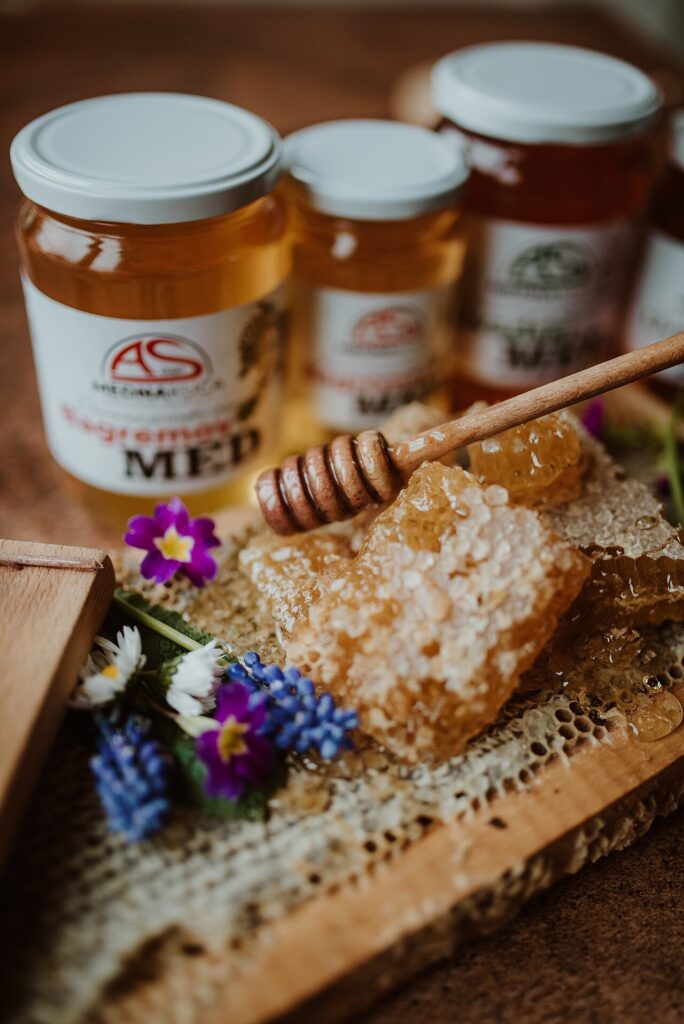
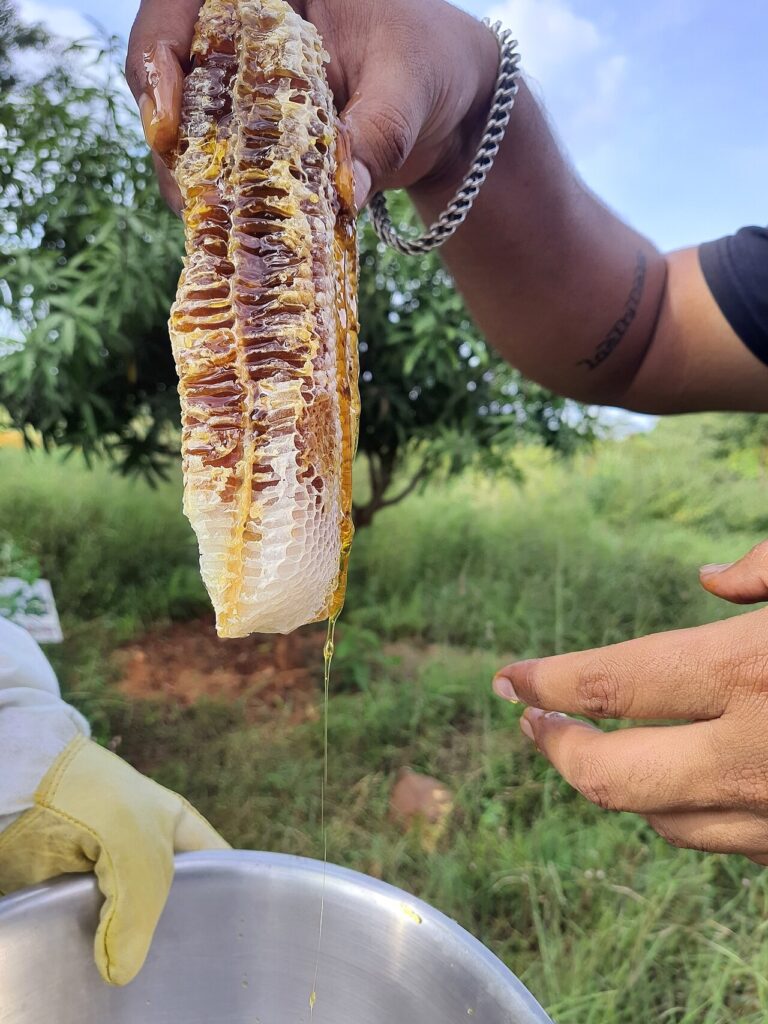
A small piece of honeycomb is fine for a healthy adult dog. It is mostly wax and honey. But it has the same sugar as honey, so keep the piece tiny. Skip it for puppies and diabetic dogs.
Can dogs have honey in peanut butter?
Yes, if the peanut butter has no xylitol. Check the label first, since some sugar free brands hide it. Plain peanut butter with a little honey is a fine rare treat for a healthy adult dog.
Honey is a sweet extra, not a health food. A small taste now and then is fine for a healthy adult dog. Puppies, diabetic dogs, and dogs with weak immune systems should skip it. Check every label for xylitol. Keep the amount small, keep it rare, and your dog can enjoy the sweet stuff with no harm done.
Related reading: Can Dogs Have Cinnamon.