Peacock Bass: The Complete Guide to Fishing, Keeping, and Eating Them
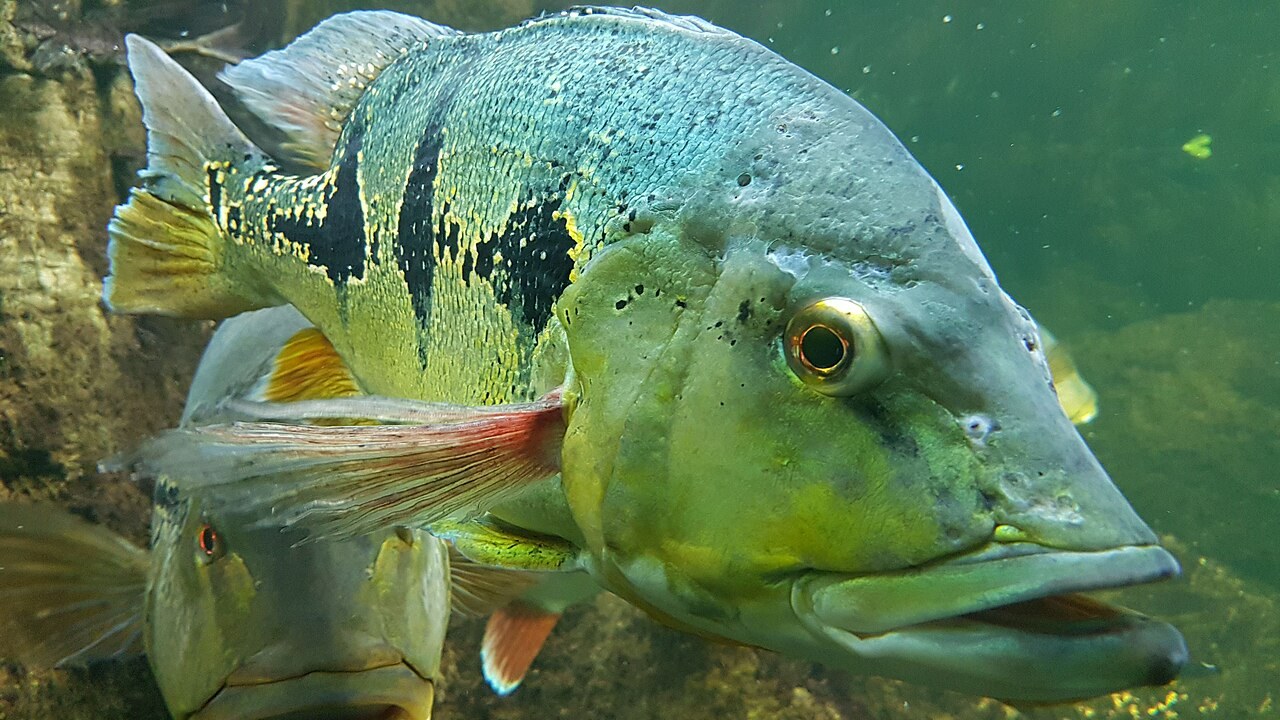
Peacock bass are not true bass. They are cichlids from the Amazon, and they hit lures like a freight train. Their gold, green, and orange colors make them easy to spot. The dark eye spot on the tail fin is their trademark. In Florida, they live in warm canals. Anglers travel from all over the US to catch them. This guide covers what they are and the species. It also covers where to find them, how to catch them, tank care, and if they taste good.
Key takeaways
- Peacock bass are cichlids from the Amazon, not true bass.
- Butterfly peacocks live in South Florida canals. The big ones live in the Amazon.
- Florida season is open all year. The bag limit is 2 fish, and only 1 can be over 17 inches.
- Topwater plugs and jerkbaits with fast retrieves draw the hardest strikes.
- A pet one needs a tank of 180 gallons or more, warm clean water, and lots of food.
What Is a Peacock Bass?
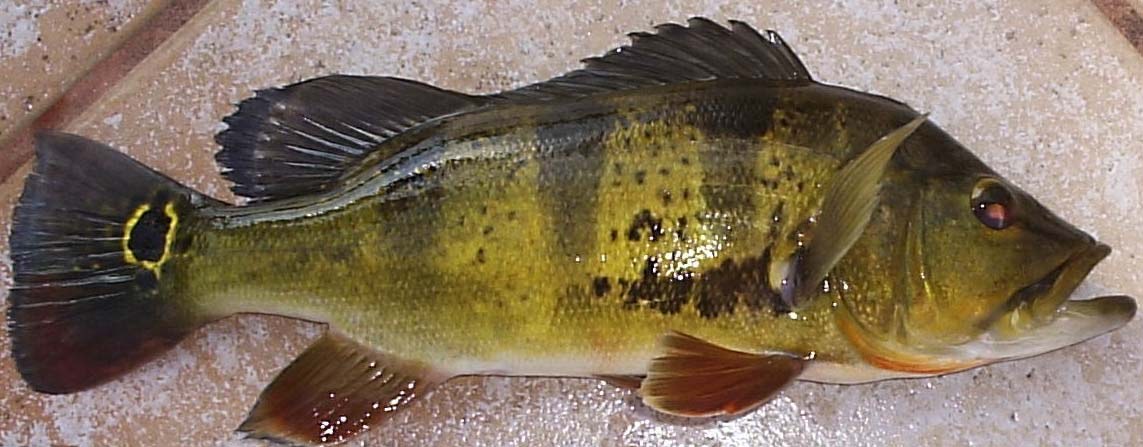
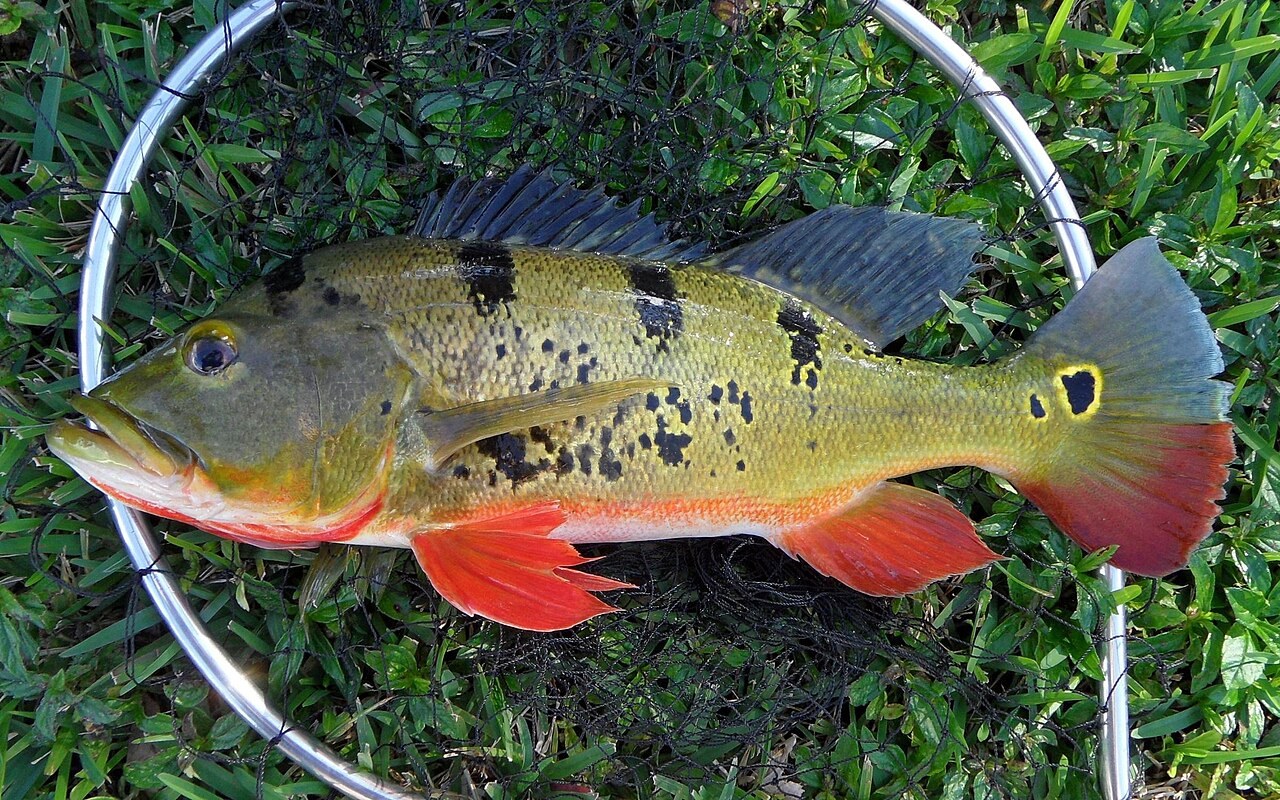
The name is a trick. This fish is not a bass at all. It is a cichlid, in the same family as tilapia and oscars. The name comes from the dark eye spot on the tail fin. It looks like the eye on a peacock feather. That spot may fool other fish into biting the tail instead of the head. The body is gold, green, and orange, with three bold black bars. The mouth is big, and the dorsal fin is spiny. Males grow a hump on the head in spawning season.
They are hunters. They eat smaller fish, shrimp, and crayfish. They hunt by sight in daylight. They rest at night. In the wild, they guard their young. Both parents stay with the fry and chase off other fish.
In spawning season, their colors turn bold. The gold deepens, and the orange fins glow. The eye spot on the tail stays clear. Some call it a false eye. It may draw a bite to the tail, away from the head. That trick helps the fish live to spawn again.
Young fish look much like adults. They show the same bars and the same tail spot. Their colors shift with mood and light. A calm fish looks pale green. An excited fish glows gold and orange. That shift can happen in seconds.
Peacock Bass Species at a Glance
There are eight known species in the genus Cichla. They look alike at first glance. Size and home range set them apart. The table below lists each one.
| Species | Max size | Where it lives |
|---|---|---|
| Speckled (Cichla temensis) | About 30 lbs | Amazon and Orinoco rivers |
| Butterfly (Cichla ocellaris) | About 12 lbs | Amazon; South Florida canals |
| Monoculus (Cichla monoculus) | About 15 lbs | Amazon basin |
| Royal (Cichla intermedia) | About 8 lbs | Orinoco river |
| Orinoco (Cichla orinocensis) | About 12 lbs | Orinoco river |
| Kelberi (Cichla kelberi) | About 10 lbs | Rivers of Brazil |
| Azul (Cichla piquiti) | About 15 lbs | Rivers of Brazil |
| Pinima (Cichla pinima) | About 20 lbs | Amazon basin |
The speckled kind is the giant of the group. It holds the world record for the largest of its kind. The butterfly kind is the one most US anglers meet. It is the species that lives in Florida.
Where Do They Live?
They come from the Amazon and Orinoco river basins. That covers Brazil, Colombia, and Venezuela. They like slow, warm water with lots of cover. Lakes, ponds, and flooded forest are ideal.
South Florida has more than 300 miles of canals. They link lakes, ponds, and neighborhoods. That web gives the fish miles of warm, food-rich water. They move along it all year. A single canal can hold fish from end to end.
They like slow water with cover. Canals, lake edges, and creek mouths are prime. They sit near docks, fallen trees, and weed lines. They wait in the shade and rush out to grab prey. Clear water helps them hunt, so they feed best on bright days.
Florida got them in 1984. The state stocked them to control tilapia and oscars. They took hold fast. Today they live in the canals of Miami-Dade, Broward, and Palm Beach counties. Lake Ida and Lake Osborne hold good numbers. So do the Everglades waterways.
They also live in Hawaii, Puerto Rico, and Panama. People stocked them in parts of Asia too. They need warm water to live. They stop feeding below about 70 degrees. They die below 60 degrees. That is why they only live in South Florida in the US.
How Big Do They Get?
In Florida, most are 2 to 5 pounds. They run 10 to 20 inches long. A big one tops 10 pounds. They grow fast. Young fish reach 12 to 14 inches in less than two years.
The Amazon holds the giants. A big speckled one can pass 20 pounds there. The largest ever caught weighed about 29 pounds. These fish live 6 to 10 years in the wild.
Spawning Season
They spawn from April to September. The peak runs in May and June, when the water is warm. Both parents guard the nest. They fan the eggs and chase off other fish. The fry stay close to the parents for weeks. During this time, the adults turn more bold in color. Males grow a clear hump on the head. They strike hard at lures near the nest, so this is a prime time to fish.
Peacock Bass Fishing in Florida
The best spots are easy to reach. Miami urban canals hold fish all year. Lake Ida and Lake Osborne in Palm Beach County are top picks. Broward canals and Everglades waterways work too. You can fish from shore. You do not need a boat.
The season is open all year. You need a Florida freshwater fishing license. The bag limit is 2 fish per day. Only 1 can be 17 inches or longer. Check the current rules with the Florida Fish and Wildlife Conservation Commission before you go. Rules can change.
How to Catch Them
They hunt by sight in daylight. Fish on warm, sunny days. Skip cold fronts. They shut down when the water cools. They rest at night, so night fishing rarely works.
Look for signs before you cast. Birds diving on baitfish mean predators are near. A swirl on the surface can be a fish chasing prey. Cast past the cover and pull the lure back fast. If a fish follows but will not strike, speed up the retrieve. A fast lure looks like prey that is trying to flee.
Live Bait
Live shiners are the top bait in Florida canals. Live shrimp work well too. Hook the bait so it can swim free. Let it drift near cover. A light spinning rod with 12 to 15 pound test line is enough.
Lures
Topwater plugs draw the best strikes. Try a Rapala Skitter Walk or a Zara Spook. Jerkbaits work too. A Rapala X-Rap or a Yo-Zuri Crystal Minnow mimics a fleeing baitfish. Use fast, jerky retrieves. These fish attack fast-moving targets. Skip plastic worms. They rarely work on this fish.
Set the hook hard and hold on. They run fast and jump clear of the water. For fish over 5 pounds, use a lip grip tool. They thrash hard, and a bare hand can get hurt. Wet your hands before you hold one for a photo. Release it fast so it swims off strong.

Common Mistakes
New anglers make the same few errors. They fish with plastic worms, which rarely draw a strike. They fish too slow. These fish want a fast, jerky retrieve. They fish on cold, gray days. A cold front can shut the bite down for days. They use line that is too light. A big fish will snap 8 pound test in the canals. They grab a big fish by hand. Use a lip grip tool instead, and keep the fish in the water for the photo.
They also rush the release. A tired fish needs time to revive. Hold it in the water and move it back and forth. Let water flow over the gills. When it kicks hard, let it go. A fish that swims off strong is a fish you may catch again.
Guided Trips and Prices
A guide can put you on fish fast. Guides know the canals and the seasonal patterns. A half-day trip in Florida runs $300 to $450 for two anglers. A full day runs $500 to $700. Amazon lodge trips cost $3,000 to $5,000 or more per person. That covers several days, guides, food, and lodging. Book early for the Amazon dry season, from September to February. Low water packs the fish into smaller areas, and catch rates climb.
A half-day trip suits first-timers. You fish the morning bite and learn the canals. A full day lets you cover more water and chase bigger fish. In the Amazon, a lodge trip is a full week of fishing. You fly in, stay at the lodge, and fish a new stretch of river each day.
Can You Keep One in an Aquarium?
Yes, but only if you have a very big tank and a lot of time. One small fish needs at least 180 gallons. An adult needs 300 gallons or more. Some keepers use indoor ponds. The water must stay warm, from 75 to 86 degrees. The pH should sit between 6.0 and 7.5. Strong filtration is a must. Change 30 to 50 percent of the water each week. They eat a lot, and they make a lot of waste.
Feed high-protein pellets, frozen fish, and shrimp. They eat any fish that fits in their mouth. Tank mates must be big and tough, like large catfish. Small fish will vanish fast. They grow to 2 or 3 feet long. This is a fish for advanced keepers only.
Start with a young fish in a big tank. A small tank will stunt its growth and stress it. Use a tight lid. They jump when something startles them. Keep the tank away from small fish. Even a peaceful tank mate can end up as lunch.
Are They Good to Eat?
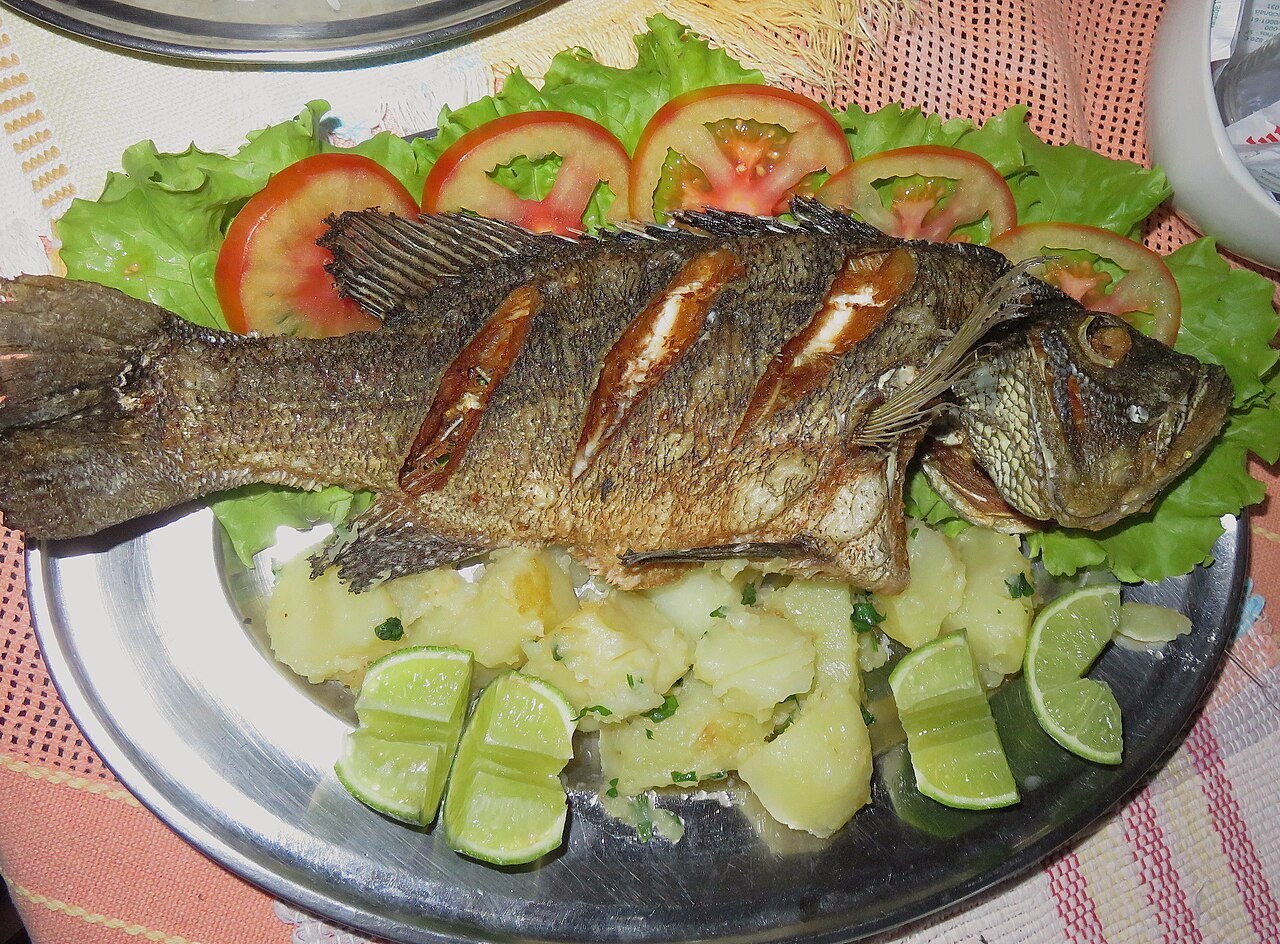
Yes. The meat is white, firm, and mild, with few bones. In Brazil, they are a prized food fish, sold as tucunare. Most US anglers release them. The sport is the point. If you keep one in Florida, stay inside the bag limit. Eat wild-caught fish in moderation, as with any freshwater fish.
Cook them fresh. Grill or pan-fry the fillets with lime and salt. The flesh stays firm and flakes clean. In the Amazon, cooks serve them whole, fried, with rice and lime. Keep only what you will eat. Release the rest so the fishery stays strong.
How They Compare With Largemouth Bass
Anglers often mix the two up. They share a name and a love of warm water. The fish are not close kin. The table below shows the key gaps.
| This fish | Largemouth bass | |
|---|---|---|
| Family | Cichlid | Sunfish |
| Native range | Amazon basin | North America |
| Colors | Gold, green, orange, black bars | Green with a dark stripe |
| Max size | About 30 lbs | About 22 lbs |
| Fight | Fast runs and jumps | Strong, less speed |
| Best bait | Live shiners, topwater plugs | Plastic worms, spinnerbaits |
| Cold water | Dies below 60 degrees | Tolerates cold water |
Where can I catch them in Florida?
Miami urban canals, Lake Ida, Lake Osborne, Broward canals, and Everglades waterways. You can fish from shore. Shore fishing works fine.
What is the best bait for them?
Live shiners and live shrimp work best. For lures, use topwater plugs and jerkbaits with fast retrieves. Skip plastic worms.
Are peacock bass good to eat?
Yes. The meat is white, firm, and mild. In Brazil, they are a prized food fish. Most US anglers release them.
How big do they get?
In Florida, most are 2 to 5 pounds. A big one tops 10 pounds. In the Amazon, a speckled one can pass 20 pounds. The largest ever caught weighed about 29 pounds.
Do they bite at night?
Rarely. They hunt by sight in daylight and rest at night. Night fishing for them is mostly a waste of time.
What is the Florida bag limit?
The limit is 2 fish per day, and only 1 can be 17 inches or longer. You need a Florida freshwater fishing license. Check the current rules with the state before you go.
Can I keep one as a pet?
Yes, with a tank of 180 gallons or more, warm clean water, and strong filtration. They grow to 2 or 3 feet. This is a fish for advanced keepers only.
Why the peacock name?
The dark eye spot on the tail fin looks like the eye on a peacock feather. That is where the name comes from.
When is the best time to fish for them?
Warm months and sunny days are best. In Florida, you can fish all year. In the Amazon, the dry season from September to February is prime. Fish the morning and late afternoon, when the sun is high and the water is warm.
Are they invasive in Florida?
The state stocked them in 1984 to control tilapia and oscars. They are now settled and regulated by the state. They only live in warm South Florida water.
Peacock bass are one of the hardest-fighting freshwater fish you can catch in the US. They hit hard, run fast, and jump high. They ask for warm water, the right bait, and a fast retrieve. Give them that, and you will see why anglers fly to Florida and the Amazon just to meet one.