Can Cats Have Down Syndrome? What Cat Owners Should Know
Can cats have Down syndrome? No. Cats cannot have Down syndrome the way people can. Down syndrome in people comes from an extra copy of chromosome 21. Cats have only 19 pairs of chromosomes. They do not have a chromosome 21 at all. So the condition cannot occur in cats. Still, some cats look or act in ways that remind people of Down syndrome. A flat face, wide set eyes, and a wobbly walk can all prompt the question. This guide explains why cats cannot have the condition. It also covers the real conditions that cause the look. And it shows how to care for a cat that needs extra help. You will learn what the science says. You will also learn how to help.
Key takeaways
- Cats cannot have Down syndrome. They have only 19 pairs of chromosomes.
- A down syndrome cat does not exist. Vets do not use that label for any cat.
- Cats can have other conditions that cause a similar look, such as cerebellar hypoplasia.
- A vet visit is the right next step if your cat shows odd signs.
- Special needs cats can live happy lives with a bit of extra care.
The Short Answer
No. Cats cannot have Down syndrome. The condition needs an extra copy of chromosome 21. Cats do not have that chromosome. They have 19 pairs of chromosomes in total. People have 23 pairs. This gap in the count is the whole answer. A cat cannot have a condition tied to a chromosome it lacks.
That does not mean your cat is fine by default. Cats can still have health problems. A flat face or a wobbly walk can point to a real condition. The label is wrong, but the signs may be real. Your vet can find the true cause. The rest of this guide shows how.
What Is Down Syndrome in People?
Down syndrome is a genetic condition in people. It is also called trisomy 21. It happens when a cell gets an extra copy of chromosome 21. Most people have 46 chromosomes in each cell. People with Down syndrome have 47. About 6,000 babies are born with it each year in the United States.
The extra chromosome changes how the body grows. Common traits include a flat face, slanted eyes, and a short neck. Learning can take more time. Muscle tone can be low. Health issues such as heart defects can occur. Each person is different, and traits vary a lot.
Doctors spot Down syndrome with a test before birth or soon after. Cats have no such test. There is no test to find a condition that does not exist. Vets test for other faults instead.
Why the Mix Up Happens
Photos of a down syndrome cat spread fast online. Monty is the most famous case. He is a cat from Denmark with a broad nose and wide set eyes. Fans gave him the label online. Grumpy Cat is another famous case. Her flat face came from feline dwarfism and an underbite. Neither cat has Down syndrome.
Otto was a kitten from Turkey. A vet once called him a down syndrome cat in public. Otto died young from heart failure. Experts later made it clear that cats cannot have the condition. The label stuck online, but the science did not back it.
The web loves a simple label. A cute cat with an odd face gets a quick tag. That tag can mislead owners. It can also delay real care. A cat with odd signs needs a vet, not a label. The next sections cover what those signs can mean.
A wrong label can hurt. It can make an owner skip the vet. A cat with a heart defect needs care, not a cute tag. Use plain words for what you see.
Signs That Look Like Down Syndrome
Some cats show traits that look like Down syndrome in people. The list below covers the most common ones. One trait alone means little. A few traits at once are worth a vet visit. Your vet can sort out what is going on.
- Wide set eyes that slant upward.
- A broad nose or a flat face.
- Small ears or ears with an odd shape.
- Low muscle tone and a soft, loose body.
- Trouble walking, eating, or using the litter box.
- Hearing loss or vision problems.
- Heart problems, such as a murmur.
- Slow growth or late milestones in a kitten.
These signs can come from many causes. Some are present from birth. Some show up after an illness or injury. A vet exam is the only way to know the cause. Do not try to name the condition at home.
Conditions That Can Look Like Down Syndrome
The term down syndrome cat is a nickname, not a diagnosis. Real conditions sit behind the look. The table below lists the most common ones. Each one has its own cause and care plan. Your vet can test for them.
| Condition | What it is | Common signs |
|---|---|---|
| Cerebellar hypoplasia | The cerebellum does not fully grow | Wobbly walk, tremors, poor balance |
| Hydrocephalus | Fluid builds up in the brain | Large head, seizures, circling walk |
| Klinefelter syndrome | A male cat has an extra X chromosome | Sterile, calico coat, slow growth |
| Head trauma | Injury to the head at a young age | Odd face shape, poor balance |
| Toxin exposure | The mother cat met toxins in pregnancy | Nerve signs, odd growth, weak muscles |
| Dysautonomia | Nerves that run body tasks fail | Dull mood, dry eyes, slow gut |
| Eyelid agenesis | A kitten is born with no eyelids | Flat face, almond eyes, eye trouble |
| Strabismus | The eyes point in different ways | Crossed eyes, mild clumsiness |
Klinefelter syndrome is the only true chromosome issue on this list. It gives a male cat an extra X chromosome. That is why some male calico cats exist. Most male calico cats cannot have kittens. The rest of the list comes from illness, injury, or growth problems.
Panleukopenia is a key cause to know. If a mother cat catches this virus in pregnancy, her kittens can be born with cerebellar hypoplasia. A vaccine can stop it. Ask your vet about the vaccine plan for your cat.
Hydrocephalus can be hard to spot at first. The head may grow large over weeks. The cat may walk in circles or have seizures. Some mild cases do well with care and drugs. Your vet can say what fits your cat.
A Closer Look at Cerebellar Hypoplasia
Cerebellar hypoplasia is the most common mix up. The cerebellum is the part of the brain that runs balance and motion. In these cats, it does not fully grow. The result is a wobbly walk and tremors. Vets and owners often call it wobbly cat syndrome.
The cause is often panleukopenia in the mother cat. The virus strikes in pregnancy and harms the kittens’ brains. Poor food in pregnancy can also play a part. The good news is that the condition does not get worse with time. It is not painful. Cats learn to cope with their wobble.
These cats need a few small changes at home. Keep food and water bowls low and wide. Use a litter box with low sides. Block stairs and high drops. Play with soft toys on the floor. Most wobbly cats live full lives with this kind of care.
Vet care for wobbly cats stays simple. The vet checks weight, teeth, and joints at each visit. Vaccines matter a lot, since illness hits these cats hard. Keep the vaccine plan up to date.
What to Do if Your Cat Shows These Signs
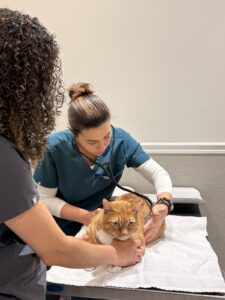
Book a vet visit. That is the first step, and the only safe one. Tell the vet what you have seen and when it started. Bring a short video of your cat walking or eating. Video helps the vet see what words cannot show.
The vet will start with a full exam. Blood work can check for illness and low levels. X rays can show bone and skull shape. Genetic tests can check for known gene faults. No test can prove Down syndrome in a cat, since the condition does not exist in cats.
Ask the vet what to watch at home. Ask how often to come back. Ask about food, vaccines, and safe play. Write the answers down. A clear plan beats worry every time.
The vet may find no cause at all. Some cats just look different. That is fine too. Your cat can still need a plan for its signs. Keep notes on what you see at home. Bring them to each visit.
Signs That Mean a Vet Visit Is Needed
Some signs need care soon, not later. The list below covers the key ones. If you see even one, book a visit. If you see a seizure or a collapse, seek care the same day. Fast care can make a real difference.
- Trouble walking or a sudden loss of balance.
- Eyes that point in different ways or a sudden change in sight.
- Hearing loss or no response to sounds.
- Trouble eating, drinking, or swallowing.
- Seizures, shaking fits, or a collapse.
- Slow growth or a kitten that misses milestones.
- Frequent illness, fevers, or infections that keep coming back.
- Weak muscles, low energy, or a cat that hides a lot.
Vet visit checklist
Tick each sign you have seen.
You checked 0 of 8 signs.
No signs ticked. Call your vet if unsure.
Use the checklist above as a guide, not a diagnosis. It cannot tell you what is wrong. It can help you speak clearly at the vet visit. Note the date you first saw each sign. Bring that list with you.
How to Care for a Special Needs Cat at Home
Daily care is simple. Keep your cat indoors. Indoor life cuts the risk of cars, dogs, and falls. Set up one safe room with food, water, and a bed. Keep the room calm and warm.
- Put food and water bowls on the floor, low and wide.
- Use a litter box with low sides for easy steps.
- Add ramps or steps to beds and sofas.
- Keep play on the floor with soft toys.
- Stick to one daily routine for meals and play.
- Groom your cat if it cannot groom itself well.
Watch weight and teeth. Cats that move less can gain weight fast. Cats with odd jaw shapes can build up tartar. Ask your vet about food amounts and tooth care. Small checks at home catch big problems early.
Play time matters for these cats. Use toys that stay on the floor. A soft ball or a feather wand works well. Keep play short and calm. Stop if your cat looks tired. Gentle play builds trust and keeps muscles strong.
Life With a Special Cat
Special cats can live happy, full lives. Monty has fans all over the world. His owner shares his daily life online. His story teaches people that a different look is not a sad life. Many owners say the same of their own cats.
Adoption is worth a thought. Shelters hold many special needs cats. They wait longer for homes than other cats. They need a bit more time and care. In return, they give a lot of love. Ask your local shelter about cats that need a home.
Share what you learn. If you post photos of your cat, add a kind note. Say that cats cannot have Down syndrome. Say what your cat does have, if you know it. You may help the next owner find care sooner.
Can cats have Down syndrome?
No. A down syndrome cat is not a real diagnosis. Cats have only 19 pairs of chromosomes. They lack chromosome 21, so trisomy 21 cannot occur in cats.
How can you tell if your cat has Down syndrome?
You cannot tell, since cats cannot have it. What you can see are signs of other conditions. A vet exam, blood work, and gene tests can find the true cause.
What is wrong with Monty the cat?
Monty was born with a broad nose and wide set eyes. Some posts say he lacks a nasal bone, but no test has proved a cause. He does not have Down syndrome, since cats cannot have it.
Does Grumpy Cat have Down syndrome?
No. Grumpy Cat did not have Down syndrome. Her flat face came from feline dwarfism and an underbite. She was a much loved cat with a very famous frown.
What is cerebellar hypoplasia in cats?
It is a condition where the cerebellum does not fully grow. It causes a wobbly walk and tremors. It often comes from panleukopenia in the mother cat during pregnancy. It does not get worse with time.
Can a cat with wobbly legs live a normal life?
Yes, in most cases. Wobbly cats learn to cope with their walk. They need a safe home with low bowls and no high drops. They can play, cuddle, and live full lives.
Do cats with these traits need special food?
Most do not need a special diet. A good cat food that fits their age is enough. Ask your vet if your cat has trouble eating or keeps a low weight. Your vet can set the right plan.
Can kittens be born with Down syndrome?
No. A down syndrome cat cannot be born. Kittens can be born with other conditions, such as cerebellar hypoplasia. A vet can check a kitten that shows odd signs.
Is there a test for Down syndrome in cats?
No test exists, since the condition does not occur in cats. Gene tests can check for other known faults. Your vet can say which tests fit your cat.
Should I adopt a special needs cat?
Yes, if you have the time and a calm home. These cats wait longer in shelters. They need a bit more care each day. In return, they make loyal and loving pets.
Can cats have Down syndrome? No. The science is clear, and it is kind news too. Your cat does not carry a human label. It may carry a real condition that needs care. A vet visit will find the cause. A calm home and a bit of patience will do the rest. Special cats ask for little and give back a lot.
Related reading: Ear Mites in Cats: Signs, Treatment, and Prevention and How Long Are Cats Pregnant? Signs, Stages, and Care.