Can Dogs Have Corn? What Every Owner Should Know
Can dogs have corn? Yes, in small amounts, if you serve it the right way. Corn is not toxic to dogs. Plain cooked kernels can be a fine occasional treat. But the cob is a different story. Corn on the cob can choke a dog. It can also block the gut, and that can need surgery. This guide gives you the short answer first. Then it covers which types are safe. It also covers how much to serve, and what to do if your dog grabs a cob.
Key Takeaways
- Yes, dogs can have plain cooked corn kernels in small amounts.
- Always cut the kernels off the cob. Never give a dog a whole cob.
- Serve corn plain. No butter, salt, or seasoning.
- Keep all treats, corn included, under 10 percent of daily calories.
- If your dog eats a cob, call your vet right away.
The Short Answer
Corn is safe for most dogs when it is plain and off the cob. Both raw and cooked kernels are safe in small amounts. Cooked kernels are easier to digest, so boil or steam them first. Frozen corn works too, once it is cooked and cooled. The key rule is simple. Serve the kernels only, never the cob. The cob cannot be digested. It can choke a dog or block the gut.
So can dogs have corn every day? No. Treat corn as an occasional snack, not as a daily food. All treats put together should stay under 10 percent of daily calories. The rest should come from a balanced dog food. A spoonful now and then is plenty. Your dog does not need corn to stay healthy. It is a fun extra, nothing more.
Which Types of Corn Are Safe?
Not all corn is the same. Some forms are fine. Some are not. The table below gives a fast check. Plain and simple wins every time. Anything with added salt, butter, or spice is a bad pick.
| Type of corn | Safe? | Why |
|---|---|---|
| Plain cooked kernels | Yes | Easy to digest when served plain and off the cob |
| Plain raw kernels | Use with care | Hard to chew and harder to digest than cooked kernels |
| Frozen corn, cooked | Yes | Same as fresh kernels once cooked and cooled |
| Canned corn | Use with care | Often has added salt, so rinse it well first |
| Creamed corn | No | Made with dairy and sugar, which can upset the stomach |
| Corn on the cob | No | Choking risk and can block the gut |
| Corn husks | No | Tough and fibrous, can cause a blockage |
| Plain air popped popcorn | Yes, in small amounts | No salt, butter, or flavoring |
| Kettle corn | No | Has sugar, salt, and oil |
| Corn chips | No | High in salt and often has added flavors |
| Corn tortillas | Use with care | High in salt, so only a small piece now and then |
Seasoned corn is the one to watch at cookouts. Butter adds fat that can lead to weight gain. In large amounts, fatty food can inflame the pancreas. Salt can be toxic in large amounts. Onion and garlic are toxic to dogs, even in small amounts. If corn was cooked with any of these, do not share it.
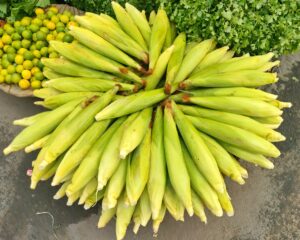
Is Corn Good for Dogs?
Corn can add a few good things to a diet. It holds fiber, which can help digestion. It has some protein and linoleic acid, a fat that helps skin and coat health. It also holds vitamins and minerals. The list below gives the main ones. One ear of corn holds about 90 calories. That makes it a light treat when the portion is small.
- Fiber for digestion and regular stools.
- Linoleic acid for skin and coat health.
- Vitamins C, B, E, and K.
- Magnesium and potassium for muscles and nerves.
- Lutein and zeaxanthin, which may help eye health.
But corn is not a must have. A good dog food already gives your dog all of these nutrients. Corn is mostly starch, which turns into sugar in the body. Too much starch can add weight over time. Think of corn as a fun extra. It is not a health food, and it should not take the place of real meals.
The Cob Is the Real Danger
The cob is the part that hurts dogs. It is hard, fibrous, and nearly impossible to digest. A dog can chew it into chunks. Those chunks can get stuck in the stomach or gut. A blockage can be life threatening. It almost always needs surgery to fix. Small dogs face the most risk, but any dog can be hurt by a cob.
Cobs are also a choking risk. The shape is just right to lodge in the throat. Never let your dog chew on a cob to strip the kernels. Cut the kernels off yourself first. Then throw the cob in a closed trash can. Dogs that raid trash can find cobs fast, so keep the lid shut.
- Repeated vomiting.
- Loss of appetite.
- Diarrhea or trouble pooping.
- Lethargy or low energy.
- A swollen or sore belly.
- Dehydration.
If you saw your dog eat a cob, call your vet at once. Do not wait for signs to show. A blockage can get worse fast. Your vet may ask you to bring the dog in right away. Quick care can save a life.
How Much Corn Can a Dog Have?
Size sets the amount. A small dog needs a small spoonful. A big dog can take a bit more. Chewy prints a serving guide by weight, and the table below uses those amounts. Keep corn to two or three times a week at most. Daily corn is too much starch for any dog.
| Dog size | Weight | Amount per serving | How often |
|---|---|---|---|
| Extra small | 2 to 10 pounds | 1 teaspoon | 2 to 3 times a week |
| Small | 11 to 20 pounds | 2 teaspoons | 2 to 3 times a week |
| Medium | 21 to 50 pounds | 1 tablespoon | 2 to 3 times a week |
| Large | 51 to 90 pounds | 2 tablespoons | 2 to 3 times a week |
| Extra large | Over 91 pounds | 3 tablespoons | 2 to 3 times a week |
Start with less than the table says. Watch your dog for a day. Loose stool or gas means the amount was too much. Cut it back or drop corn fully. Dogs with soft stomachs often do worse with starchy foods. A plain treat like a carrot slice may suit them better. And remember the 10 percent rule. All treats, corn included, stay under 10 percent of daily calories.
How to Serve Corn Safely
Keep it plain and simple. The safest corn is boiled or steamed in plain water. No salt, no butter, no oil, no spice. Let it cool before you serve it. Hot corn can burn your dog’s mouth. Then cut the kernels off the cob with a knife. Throw the cob away in a closed can.
- Sprinkle a spoonful over kibble as a topper.
- Offer a small handful of plain kernels as a snack.
- Stuff a KONG toy with corn and plain canned pumpkin.
- Spread corn with xylitol free peanut butter on a lick mat.
- Mix corn into a vet approved homemade treat recipe.
Introduce corn slowly if your dog has never had it. Give a tiny taste first. Watch for itchy skin, ear trouble, or loose stool over the next day. A corn allergy is rare, but it can happen. If you see any of these signs, stop the corn and talk to your vet. Frozen corn can be a cool topper on a hot day. Cook it first, let it cool, and sprinkle a spoonful over kibble.
Corn at Cookouts: Keep Cobs Out of Reach
Corn shows up most at summer cookouts. That is when most cob trouble happens. A cob sits on a plate at dog height. A dog can grab it in one second. Set plates up high, out of reach. Keep the grill area clear of dropped food. Tell guests not to feed your dog from their plates. Most people do not know a cob can hurt a dog. At a cookout, guests may ask, can dogs have corn from the grill? Say yes to plain kernels, and no to the cob.
Clean up as you go. Put finished cobs in a closed trash can right away. Do not leave them in an open bag on the ground. Dogs can smell corn from far off. A closed lid is the best guard. If you grill corn, cut the kernels off before you serve it to your dog. The same rules hold at home or at a park.
Can Puppies Have Corn?
Puppies raise the same question: can dogs have corn when they are young? Yes, puppies 8 weeks or older can have a tiny taste. It must be plain, cooked, and off the cob. Keep the amount very small. Puppies have soft stomachs and strict food needs. Their main food should be puppy food made for growth. Corn is only an extra, never a meal.
Go slow with a first taste. Give a few kernels and watch your puppy for a day. Loose stool or gas means the belly is not ready. Try again in a few weeks, or skip corn fully. When in doubt, ask your vet. Your vet knows your puppy’s health best.

Corn in Dog Food
You may see corn listed on your dog’s food bag. Corn is a common part of many dog foods. It gives carbs for energy and fiber for digestion. It is safe as part of a balanced food. The corn in dog food is often field corn, not sweet corn. It is ground and cooked into the kibble. That is very different from handing your dog a whole cob.
Some owners worry that corn is a cheap filler. Vets and pet food guides say it can be a fine part of a balanced diet. The key is the whole recipe, not one item. A food that meets AAFCO standards gives your dog what it needs. If your dog does well on its food, the corn in it is not a problem.
One warning matters. Never feed moldy corn to a dog. Mold on corn can make aflatoxin, a toxin from the mold Aspergillus flavus. It can harm the liver. It can make a dog very sick. If corn smells musty or looks moldy, throw it out. The same rule covers any moldy food.
If Your Dog Eats Too Much Corn
A few extra kernels will most likely end fine. But a big portion can upset the stomach. Too much corn can bring gas, bloating, and loose stool. It can also bring vomiting and a loss of appetite. Give fresh water and a plain meal. Watch your dog for the next day. Most dogs settle on their own.
- Vomiting or loose stool that lasts more than a day.
- A swollen face, hives, or trouble breathing.
- Weakness, staggering, or a sudden collapse.
- A seizure or a dog that will not respond.
- Signs of a blockage after eating a cob.
Call your vet at once if your dog ate a cob, even a small piece. Do not try to make your dog vomit at home. That can do more harm than good. Bring the cob or a photo of it if you can. Your vet can then see what your dog ate.
Can dogs eat corn on the cob?
No, never. The cob can choke a dog or block the gut. A blockage can be life threatening and almost always needs surgery. Always cut the kernels off first, and throw the cob in a closed trash can.
Can dogs eat raw corn kernels?
Raw kernels are safe in small amounts, but they are hard to chew and digest. Cooked kernels are easier on the stomach. Boil or steam the corn until tender, let it cool, and serve it plain.
Can dogs eat canned corn?
Yes, in small amounts, if it has no added salt. Most canned corn has added sodium, so rinse it well under water first. Plain frozen corn is a better pick. Cook it before you serve it.
Can dogs eat popcorn?
Yes, plain air popped popcorn is fine as a rare treat in small amounts. Skip butter, salt, and flavoring. Never give unpopped kernels, which can crack teeth or choke a dog. Kettle corn is not safe, since it has sugar, salt, and oil.
Can dogs eat corn tortillas?
A small piece now and then is fine. Tortillas are high in salt, so they should not be a daily treat. Corn chips are worse, since they add more salt and flavoring. Skip chips fully.
Can puppies eat corn?
Yes, puppies 8 weeks or older can have a tiny taste of plain cooked corn off the cob. Keep the amount very small. Puppies have soft stomachs, so watch for loose stool. Ask your vet first if your puppy has a weak stomach.
How much corn can I give my dog?
It depends on size. A medium dog can have about one tablespoon, two or three times a week. A small dog needs about two teaspoons. A large dog can have about two tablespoons. Always start with less.
Is corn in dog food bad for dogs?
No. Corn is a common part of many balanced dog foods. It gives carbs and fiber. The corn is ground and cooked into the kibble. If your dog does well on its food, the corn in it is not a problem.
What should I do if my dog eats a corn cob?
Call your vet at once. Do not wait for signs. A cob can block the gut, and a blockage can be life threatening. Your vet may ask you to bring your dog in right away. Quick care can save a life.
Can dogs eat corn husks?
No. Husks are tough and fibrous, and dogs cannot digest them. They can choke a dog or block the gut. Peel the husk off and throw it away before you serve any corn.
Can dogs have corn? Yes, as an occasional plain treat. Cut the kernels off the cob. Skip butter, salt, and spice. Keep the amount small, and keep it rare. The cob and the husk stay in the trash, never in the bowl. Do that, and your dog can enjoy a taste of summer with no harm done.
Related reading: Can Dogs Have Cinnamon and Can Dogs Have Honey.