Cockatiel Care: The Complete Guide for Happy, Healthy Birds

Thinking about a cockatiel? You picked a great bird. Cockatiels are gentle, social, and full of charm. They whistle tunes, learn a few words, and love time with their people. This cockatiel care guide covers the cage, the food, the daily routine, and the health signs to watch.
A cockatiel is a small parrot from Australia and the smallest member of the cockatoo family. Wild cockatiels live in flocks and roam open woodlands in search of grass seed. Pet cockatiels keep that same social nature.
Key Takeaways
- A cockatiel needs a large cage, a pellet based diet, and one to three hours with you each day.
- The cage should be at least 24 inches wide with close bar spacing.
- Pellets should make up most of the diet. Seeds are treats, not the main meal.
- Cockatiels need 10 to 12 hours of sleep each night in a dark, quiet spot.
- A healthy cockatiel can live 15 to 25 years, so this is a long term pet.
What Is a Cockatiel?
A cockatiel grows to about 12 to 13 inches long from beak to tail tip. It weighs about 3 to 4 ounces. The most common color is grey with a yellow face and bright orange cheek patches. Males often have a brighter yellow face than females. Other colors include lutino yellow, pied, pearl, and white faced.
The crest tells you a lot. A crest held high means the bird is alert or excited. A crest held flat means the bird is scared or angry. A crest at rest means the bird is calm.
Cockatiels are smart and social. They learn to whistle tunes and can pick up a few words. They are not loud like big parrots, but they do chirp and whistle through the day. Males tend to be the better whistlers. Females are often quieter.
About 4.8 million homes in the United States keep cockatiels. They rank among the top five most popular pet birds in the country.
Is a Cockatiel Right for You?
A cockatiel is a long term pet. With good care, it can live 15 to 25 years. Some live even longer. Be sure you want a pet that may be with you for decades.
Cockatiels need time. Plan for one to three hours with your bird each day. That time can be play, training, or just sitting near you. A bird left alone all day will get bored and loud.
Cockatiels make dust from powder down feathers. In a home, that dust coats the cage and nearby shelves. If you have asthma or dust allergies, think twice. A good air filter near the cage helps.
Cockatiels fit apartment life well. They are quieter than most parrots. They still whistle in the morning and evening. That is normal. It suits a person who works from home. If you travel often, two birds may be better than one.
Setting Up the Cage
Good cockatiel care starts with the cage. Buy the largest cage you can fit. A cockatiel needs room to spread its wings and hop between perches.
Pick a cage that is at least 24 inches wide, 18 inches deep, and 24 inches tall. Bigger is always better. Bar spacing should be no wider than three quarters of an inch. Wider gaps can trap a head or a foot.
Place the cage in a bright room near the family, against a wall so the bird feels safe. Keep it away from drafts, kitchens, and direct sun. Fumes from hot pans can harm birds fast.
Give the cage perches of more than one size and type. Wood perches, rope perches, and natural branches all work. Perch width should run from about five eighths of an inch to one and a half inches. Do not use sandpaper perch covers. They hurt the feet.
Add three or four toys and rotate them each week. Bells and shreddable paper toys are good picks. A cuttlebone gives calcium and trims the beak. Change the paper on the floor each day.
Cover the cage at night. A light cover blocks drafts and helps the bird sleep. Leave a small gap at the bottom for air. A night light near the cage can help stop night frights.
What Do Cockatiels Eat?
Food is where many owners go wrong. A seed only diet is high in fat and low in the nutrients a cockatiel needs. Birds on seed only diets often grow sick with time. Pellets should make up most of the diet. They give balanced nutrition in each bite.
Offer dark leafy greens and chopped vegetables each day. Kale, broccoli, carrots, and peas are good picks. Wash all fresh food first. Fruit is fine in small amounts a few times a week. Take out fresh food after a few hours.
Seeds and millet sprays are treats, not meals. Use them for training and foraging fun. A small amount each day is plenty. Spray millet is a great first treat when you tame a new bird.
| Food | How much | Notes |
|---|---|---|
| Pellets for small parrots | Most of the diet | The base food each day |
| Leafy greens and vegetables | A small bowl each day | Kale, broccoli, carrots, peas |
| Fruit | A few pieces, a few times a week | Apple, banana, berries |
| Seeds and millet spray | A small treat each day | Use for training |
| Cuttlebone | Always in the cage | Calcium and beak trim |
| Fresh water | Change each day | Clean bowl or bottle |
Never feed avocado, chocolate, caffeine, or alcohol. All four can poison a bird. Keep your bird away from salty snacks and fried food too. A cockatiel will beg for your food. Most human snacks are bad for birds.
Your Daily Care Routine
Cockatiels do best on a routine. A set routine keeps the bird calm and keeps you on track. Most tasks take only a few minutes. The table below shows the full week at a glance.
| Task | When | How often |
|---|---|---|
| Fresh food and water | Morning | Each day |
| Spot clean the cage floor | Morning | Each day |
| Time out of the cage | Morning and evening | Each day |
| Talk, train, or play | Through the day | Each day |
| Mist or bath | Midday | Three or four times a week |
| Full cage scrub | Weekend | Once a week |
| Rotate toys | Weekend | Once a week |
| Weigh the bird | Same day each week | Once a week |
Morning is the best time for fresh food and water. Take out old food first. Rinse the bowls. Check the droppings as you clean. Big changes in color or form can be an early sign of illness.
Let the bird out of the cage each day. One hour in the morning and one hour in the evening works well for most birds. Close windows and doors first. Turn off fans. Keep dogs and cats out of the room.
Bonding With Your Cockatiel
Trust grows slow and steady. A new cockatiel may be shy for days or weeks. That is normal. Sit near the cage and talk in a soft voice. Let the bird watch you. Do not grab the bird. Let it come to you.
Offer millet spray through the bars. Hold it still and let the bird eat. Soon the bird will take food from your hand inside the cage.
Teach the step up next. Hold your finger near the feet and say step up. Most birds step up fast once they trust your hand. Keep sessions to five minutes at first.

Two cockatiels sitting side by side on a nest box show how social these birds are. A lone bird bonds hard with its owner. A pair bonds more with each other. Both setups work. If you work long hours, a pair is the kinder pick.
Training and Sounds
Cockatiels are great whistlers. Males often learn tunes and wolf whistles. Some learn a few words like hello and pretty bird. Females whistle less but still chirp and sing. Talk to your bird each day.
Use short training sessions. Three sessions of five minutes beat one long session. Reward each good try with millet or praise. Target training works well. Hold a stick near the beak. When the bird touches it, give a treat.
Watch the crest and the body to read the mood. A high crest means the bird is alert. A flat crest and hissing mean back off. A bird that grinds its beak before sleep is happy. A bird that screams all day is often bored. More play time helps.
Exercise and Play
A cockatiel needs to move each day. In the wild, these birds fly long distances to find food. A pet bird needs out of cage time to stay fit. Aim for one to two hours out of the cage each day.
Make the room safe first. Close windows and doors. Cover mirrors so the bird does not fly into them. Turn off ceiling fans.
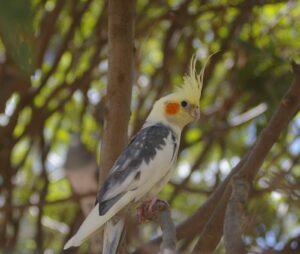
A wild cockatiel perched in a tree loves to climb and look around. Give your bird a play gym or a tall stand. Add ladders, ropes, and swings.
Foraging keeps the mind busy. Hide food in paper cups or wrap it in plain paper. Let the bird tear the paper to find the treat. Flight is the best exercise. Talk to an avian vet before you clip wings.
Bathing and Grooming
Cockatiels love water. Mist your bird with clean water three or four times a week. Use a fine spray bottle. Some birds love a shallow dish to bathe in. Others like a gentle shower from a tap. Let the bird choose. Dry the bird in a warm room away from drafts.
Molting happens once or twice a year. Old feathers fall out and new ones grow in. The bird may look scruffy for a few weeks. Pin feathers feel sore, so go easy on head scratches during a molt. A good diet helps new feathers grow strong.
Nails grow fast. Check them each month. A vet or a bird groomer can trim nails safely. Do not try this at home unless you know how. The powder down dust is normal. Wipe the cage area each week.
Health Problems to Watch For
Cockatiels hide illness well. A sick bird still tries to act normal. That is why daily checks matter. Look at the bird each morning. Is it eating and drinking? Is it active and bright? Are the droppings normal? A change in any of these is a sign to watch.
Call an avian vet fast if you see any of these signs. A bird that sits fluffed up and quiet all day needs help. A bird that eats less or stops eating needs help. Watery droppings, a runny nose, or noisy breathing need help too. Birds go down fast, so do not wait and see.
Night frights scare many owners. A bird wakes in the dark and thrashes around the cage. It may break a blood feather and bleed. Stay calm. Turn on a soft light. Talk in a low voice. Check the bird once it calms. A small night light can stop most night frights.
Female cockatiels may lay eggs with no male around. This is common. Do not give a lone female a nest or a dark hideaway. That can start chronic egg laying. If your bird lays eggs often, ask an avian vet for help. Too many eggs drain calcium from the body.
Take your bird for a health check once or twice a year. An avian vet knows birds best. A vet check can catch problems early, while they are still easy to treat.
How long do cockatiels live?
A pet cockatiel lives 15 to 25 years with good care. Some live past 25. A healthy diet, a clean cage, daily time with you, and vet checks all add years.
Do cockatiels talk?
Some do, but most learn only a few words. Males are the better talkers. They may learn hello, pretty bird, and their own name. Cockatiels are far better whistlers than talkers. Many learn full tunes.
Are cockatiels good pets for beginners?
Yes. Cockatiels are one of the best first birds. They are gentle, hardy, and easy to handle once tame. They need daily time and a large cage, but the care is simple to learn.
How big should a cockatiel cage be?
Pick a cage at least 24 inches wide, 18 inches deep, and 24 inches tall. Bigger is better. The bird must spread its wings fully without touching the bars. Bar spacing should be no wider than three quarters of an inch.
What do cockatiels eat?
Pellets made for small parrots should make up most of the diet. Add dark leafy greens and chopped vegetables each day. Give fruit in small amounts a few times a week. Seeds and millet are treats only. Never feed avocado, chocolate, caffeine, or alcohol.
Do cockatiels need another bird for company?
Not always. A lone cockatiel bonds hard with its owner if you give it one to three hours each day. A bird left alone all day will get lonely. If you work long hours, a second bird is kinder.
Why does my cockatiel scream at night?
A night fright is the most common cause. The bird wakes in the dark and flaps in a panic. A soft night light near the cage helps a lot. Check the bird for broken feathers once it calms.
Can I keep a cockatiel in an apartment?
Yes. Cockatiels are one of the best apartment birds. They are quieter than most parrots and fit in a small home. They still whistle in the morning and evening. That is normal. Most neighbors find the sound pleasant.
How much time out of the cage does a cockatiel need each day?
Aim for one to two hours each day. Split it into a morning session and an evening session. The bird can sit on a play gym, train with you, or just hang out near you. More time is better.
Do cockatiels like to be held?
Most tame cockatiels love head scratches and sitting on a shoulder. They do not like to be held tight or grabbed. Let the bird come to you. Offer a finger and let it step up. Once it trusts you, it will ask for scratches by bowing its head.
With steady cockatiel care, your bird can stay happy and healthy for years. Start with a big cage and a good diet. Give the bird time each day. Learn its sounds and moods. When in doubt, call an avian vet early. A quick call beats a late one.